
Artificial Turf With a Dog in Central Florida: What to Ask Before You Rip Out the Grass
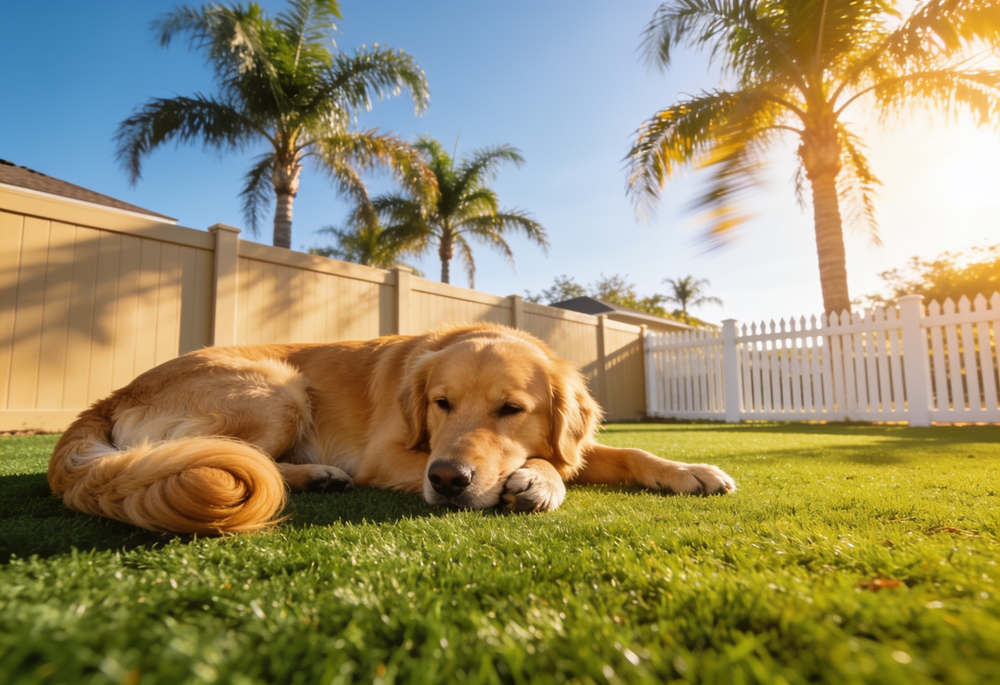
Artificial turf with a dog is low maintenance, not no maintenance, and the install is where the difference between a backyard that looks good for years and one that mats, smells, and disappoints within a season gets decided. The grass itself is the easy part. The drainage, the base, the pile height, and the products used underneath are what determine how the turf holds up to a dog running the same perimeter path every day. MV Lawn Services and Landscaping brings samples to the site visit so families can choose before anything goes in, and the conversation starts with questions about the dog, not just the yard. Call MV Lawn for samples and a quote or reach the team at (407) 556-5164.
The question nobody asks until it is too late
Dog owners in the Oviedo area considering turf replacements almost always start with the same question: will this hold up? The right follow-up question is: what kind of dog do you have? That variable changes the specification meaningfully. A large dog that patrols the fence line repeatedly compresses and mats the turf pile in a predictable path. Over time, a high-pile turf in that situation looks worn along the patrol route and full everywhere else, which is not the uniform look anyone paid for. Lower pile height turf stands up better under that kind of consistent directional pressure. It does not mat the same way and recovers more easily after heavy use. A smaller dog in the same yard produces far less compression per square foot and the pile height question matters much less.
Families in the Winter Springs area with multiple dogs, or a single large breed that is highly active, also need to think about drainage capacity before they choose a product. Dogs produce urine volume that has to move through the turf and the base layer and exit cleanly. A turf installed over a base that does not drain adequately holds moisture, which creates the odor problem that makes some homeowners regret the installation. The drainage layer is not a finishing detail. It is a functional requirement, particularly in Central Florida's wet season when rain is already saturating the ground and the turf has to shed both sources simultaneously.
In Celebration and similar planned communities where backyards tend to be smaller and more enclosed, the drainage question is even more concentrated. A smaller yard with a large dog has a higher waste-to-surface-area ratio than the same dog in a larger space. Getting the drainage specification right for the actual yard size and actual dog load is part of what the site assessment is for.
What a proper install actually looks like
MV sets artificial turf on a compacted concrete-fines base, the same material used under their paver installations. That base compacts to a dense, stable surface that does not shift under foot traffic, drains effectively, and provides a firm backing for the turf layer above it. Sand is brushed into the turf over the top to add weight, stabilize the fibers, and provide a clean surface for the turf to sit against. Where additional drainage is needed based on the yard's grade and the dog's load, drainage components are added before the turf goes down.
Every product MV uses for pet installations is antimicrobial, lead-free, and pet-safe. The antimicrobial treatment matters because it addresses bacterial growth at the fiber level, which is one of the sources of persistent odor in turf installations that were not specified correctly for pet use. It does not replace maintenance, but it extends the window between maintenance cycles significantly compared to turf without it.
Seams are hidden during installation. A visible seam line is a workmanship issue, not a product issue, and it is the kind of detail that separates an install done by a crew that has done this before from one that has not. MV hides seams as part of the standard installation process, not as an upgrade.
What maintenance actually looks like
Low maintenance in this context means:
- Removing solid deposits promptly, the same day when possible, before they dry into the fibers
- Rinsing the area with water after liquid waste to dilute and flush it through the drainage layer
- Applying a pet-specific turf deodorizer on a regular schedule, particularly during hot months when odor develops faster
- Blowing off leaves, debris, and organic material regularly so it does not break down on the surface and create a growing medium for weeds or mold at the edges
- Brushing the pile occasionally in high-traffic areas to keep the fibers upright and prevent matting
That list is genuinely shorter than mowing, fertilizing, reseeding, dealing with bare spots from dog urine damage, and managing the muddy patches that develop in Florida lawns during the wet season. But it is not zero, and homeowners who expect zero tend to be disappointed at the two-year mark.
Choosing the right product before the install
MV brings physical samples to every artificial turf installation consultation so families can see and feel the difference between pile heights, textures, and product grades before making a decision. The difference between a 30-millimeter pile and a 40-millimeter pile is visible and tactile, and the right choice depends on the dog, the yard size, and what the family wants the space to look like and feel like underfoot. Choosing off a photo online and then being surprised by what arrives on installation day is the kind of experience a site visit with samples prevents.
If you have a dog and a Central Florida backyard that needs a better solution than grass that cannot survive the combination of Florida heat and pet traffic, the right starting point is a conversation about the dog, the yard, and the drainage before anyone talks about specific products. Call MV Lawn Services and Landscaping at (407) 556-5164 or request your free turf consultation and samples from MV Lawn and find out what the right installation looks like for your specific yard and your specific dog.